
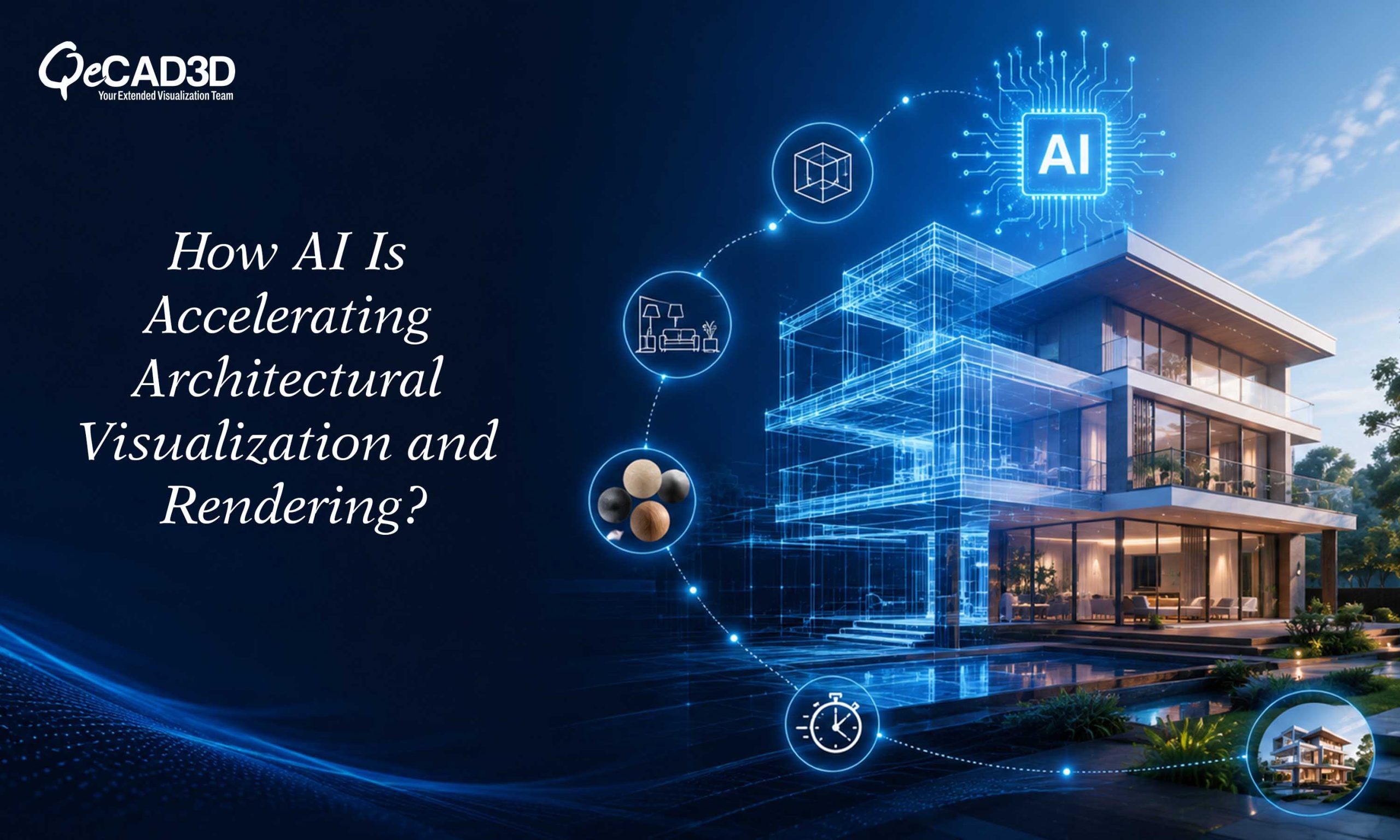
How AI Is Accelerating Architectural Visualization and Rendering?
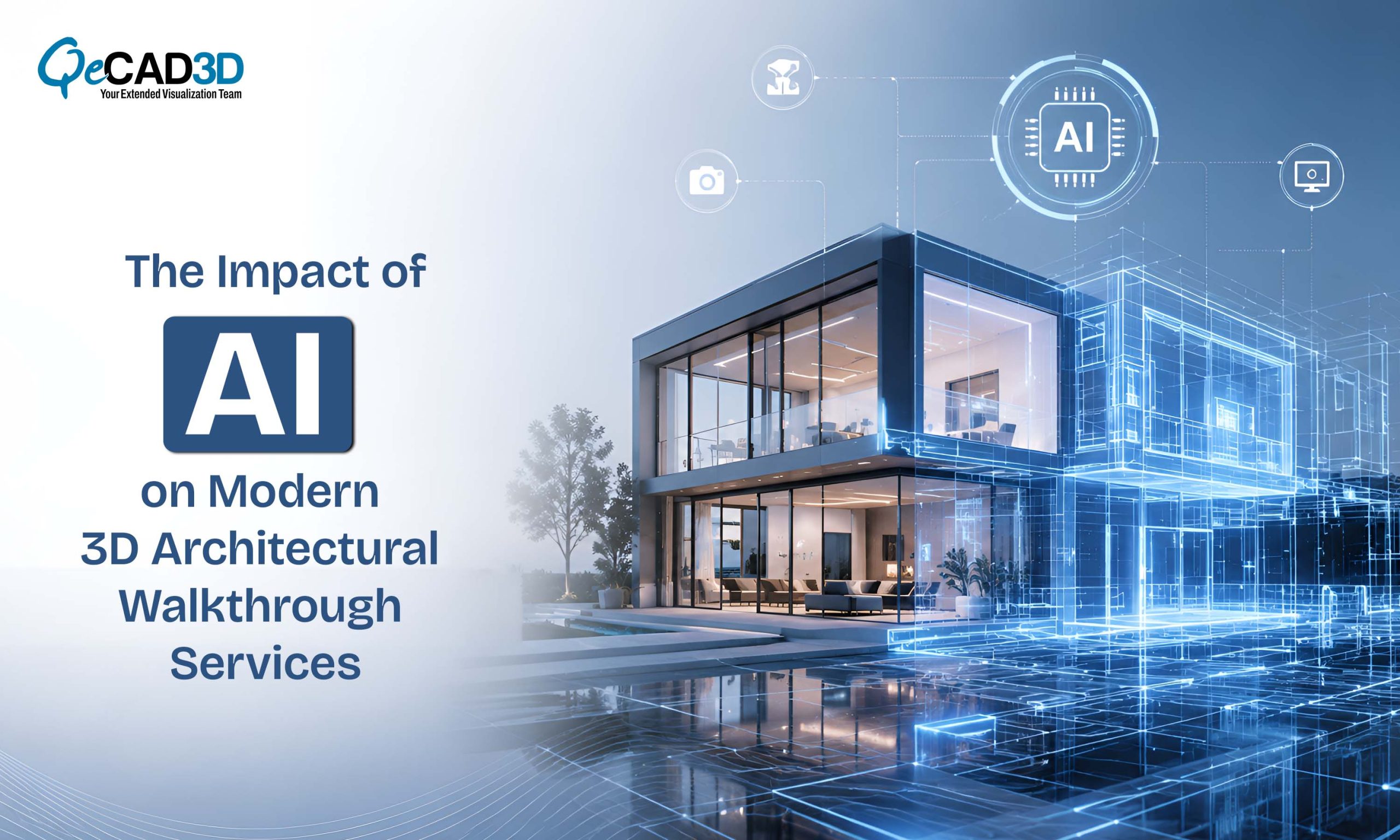
Architectural visualization has evolved from a purely manual and time-intensive process into a highly intelligent, technology-driven discipline. AI is now transforming how the architects, designers and visualization professionals create, refine and deliver visual content. From concept generation to photorealistic rendering, AI-powered tools are accelerating workflows, improving quality and enabling greater creative exploration.
As client expectations for immersive and realistic presentations continues to grow, AI is becoming an integral part of modern Architectural Visualization Services thus allowing the teams to deliver compelling visuals with increased speed and efficiency.
The Traditional Visualization Process
Conventional architectural visualization workflows typically involves:
- ● Concept development and mood board creation
- ● 3D modeling and scene setup
- ● Material and texture assignment
- ● Lighting adjustments
- ● Rendering and post-processing
- ● Design revisions based on stakeholder feedback
While these steps remains fundamental, they often require extensive manual efforts and multiple iterations. AI technologies are now optimizing nearly every stage of this process.
AI-Powered Concept Generation
Among the major innovations is AI-assisted conceptualization. Generative AI tools can transform the sketches, textual descriptions or massing models into multiple visual design alternatives within seconds.
This capability allows architects and visualization artists to:
- ● Explore diverse design directions rapidly
- ● Create mood boards automatically
- ● Produce preliminary presentations earlier in the design cycle
- ● Enhance collaboration between the architects and clients
Instead of spending hours creating initial concepts, designers can evaluate numerous possibilities and focus on refining the most promising solutions.
Faster Material and Texture Creation
Creating realistic materials traditionally requires considerable effort. AI-driven texture generation tools now simplify this process by automatically producing:
- ● Wood and concrete finishes
- ● Metal and glass surfaces
- ● Fabric and stone textures
- ● Procedural materials with realistic imperfections
AI algorithms can also upscale low-resolution textures and improve their visual quality, resulting in more convincing scenes.
Intelligent Lighting and Scene Optimization
Lighting is a fundamental element in architectural visualization. AI-enabled rendering platforms can analyze the scene composition and automatically optimize:
- ● Sun positioning
- ● Exposure settings
- ● Shadow quality
- ● Ambient lighting balance
- ● Camera angles
These intelligent adjustments helps in achieving the photorealistic results with fewer manual interventions thus reducing the time required for scene setup.
Accelerating Rendering Performance
Rendering has traditionally been one of the most computationally demanding stages of visualization. AI-based denoising technologies have dramatically reduced the render times by producing clean images with fewer samples.
Benefits includes:
- ● Faster turnaround times
- ● Lower hardware requirements
- ● Reduced energy consumption
- ● Increased productivity for visualization teams
Artists can generate high-quality outputs without waiting for lengthy rendering cycles.
AI-Assisted Post-Production
Post-processing is no longer limited to conventional image editing techniques.
AI tools can automatically enhance rendered images by:
- ● Improving color balance
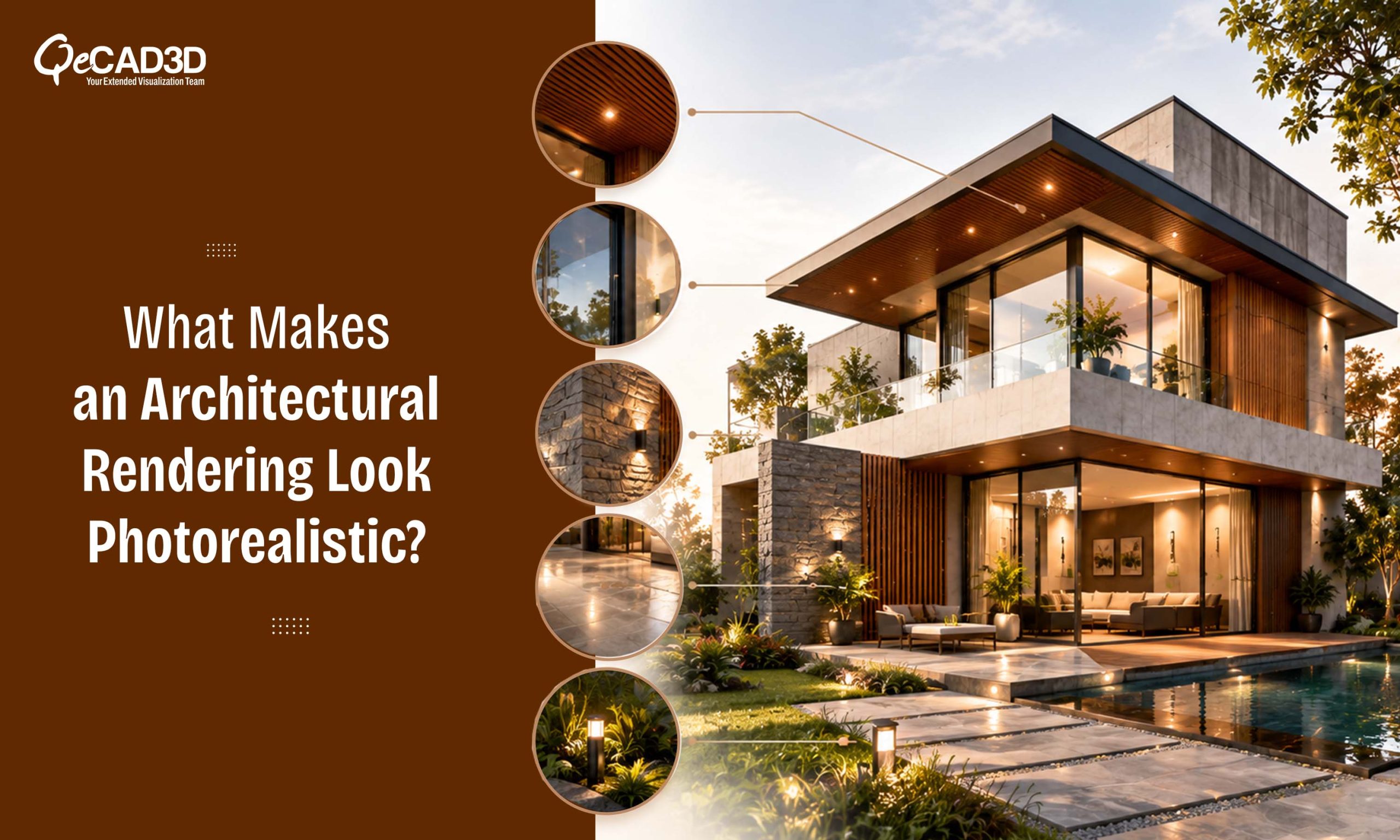
- ● Adding realistic skies and landscapes
- ● Generating vegetation and entourage elements
- ● Removing noise and imperfections
- ● Enhancing image sharpness
These capabilities significantly reduce manual editing efforts while maintaining the visual consistency.
Automated Object Recognition and Asset Placement
AI is also streamlining the scene population. Machine learning algorithms can intelligently place:
- ● Furniture
- ● Trees and vegetation
- ● Vehicles
- ● Human figures
- ● Decorative elements
Instead of manually arranging hundreds of objects, designers can generate realistic environments automatically while preserving composition and scale.
Real-Time Visualization and Interactive Experiences
Modern AI technologies are enabling real-time rendering and interactive walkthroughs. Combined with the game engines and cloud computing, AI helps to create:
- ● Immersive virtual tours
- ● Interactive design reviews
- ● Digital twins
- ● AR and VR experiences
Stakeholders can visualize design intent instantly thus improving the communication and reducing the revisions during the later project phases.
Predictive Design Insights
AI is moving beyond image generation and entering decision support. Advanced algorithms can evaluate:
- ● Daylight penetration
- ● Energy performance
- ● Space utilization
- ● Material efficiency
- ● User behavior patterns
These predictive capabilities allows the architects to make informed design decisions while simultaneously developing the visualization assets.
Enhancing Exterior Visualization
AI is bringing the remarkable improvements to the Exterior Rendering Services by automating environmental elements and contextual details. Features such as intelligent vegetation placement, atmospheric simulation, sky replacement and seasonal adjustments thus allowing the visualization professionals to create the realistic exterior scenes much faster than the traditional methods.
This not only improves presentation quality but also provides clients with a better understanding of how a project will interact with its surroundings.
Human Creativity Still Leads
Despite rapid advancements, AI is not replacing the visualization artists or architects. Rather, it functions as an intelligent assistant that handles the repetitive and computationally intensive tasks.
Human expertise remains essential for:
- ● Design intent interpretation
- ● Artistic direction
- ● Storytelling and composition
- ● Client communication
- ● Creative decision-making
The most successful workflows combine human creativity with AI-driven efficiency.
The Future of Architectural Visualization
AI is redefining the architectural visualization by making workflows faster, smarter and more adaptive. From concept generation and rendering optimization to immersive experiences and predictive analytics, artificial intelligence is empowering professionals to deliver higher-quality visualizations with unprecedented speed.
As AI technologies continues to mature, architectural visualization will become increasingly collaborative, interactive and data-driven. Firms that embraces these innovations today will be better positioned to meet growing client expectations and remain competitive in the rapidly evolving AEC industry.