
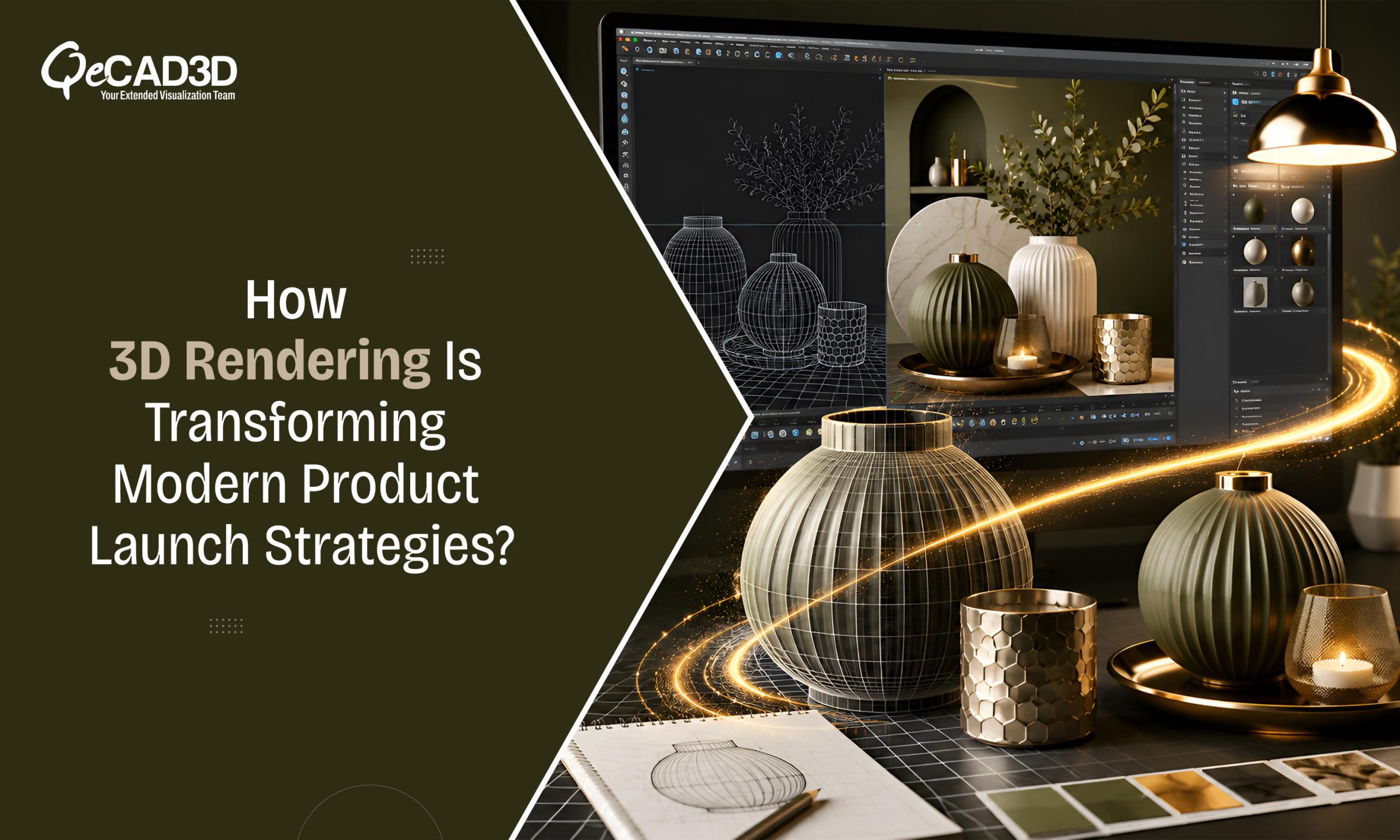
How 3D Rendering Is Transforming Modern Product Launch Strategies?
Launching a new product has become a race against time. Whether it is consumer electronics, furniture, industrial equipment, medical devices or even home décor, brands are expected to unveil the products faster while maintaining the exceptional visual quality across every marketing channel. Traditional product photography often becomes a bottleneck because it requires physical prototypes, studio setups, logistics and multiple rounds of reshoots whenever the design changes.
This is where 3D product rendering has transformed the product development and marketing workflow. By creating photorealistic digital representations before manufacturing is complete, businesses can accelerate the product launches, reduce marketing delays and also improve the collaboration between the design, engineering and sales teams.
The Shift from Photography to Digital Visualization
Modern product development no longer follows a strictly linear process where the manufacturing finishes before the marketing begins. Instead, companies increasingly develops the products and marketing assets simultaneously.
With advanced 3D rendering software, the designers can create highly realistic images directly from the CAD models or 3D designs. These visuals closely resemble the professional product photography, allowing the businesses to prepare websites, catalogs, advertisements, packaging, social media campaigns and eCommerce listings well before the first physical product reaches the market.
This parallel workflow significantly shortens the overall product launch timeline.
Why Traditional Product Photography Slows Launches?
Conventional product photography typically depends on several stages:
• Manufacturing a physical prototype
• Shipping samples to photography studios
• Studio setup and lighting
• Multiple product angles
• Editing and post-production
• Repeating the process whenever the design changes
Even the minor design revisions can require another complete photo shoot thus increasing both the costs and launch delays.
In contrast, 3D rendering enables instant updates by modifying the digital model instead of recreating the entire photography process.
How 3D Product Rendering Accelerates Product Launches?
- Marketing Can Start Before Manufacturing
The major advantages among all is that the marketing teams no longer needs to wait for the finished products.
Once engineers finalizes the CAD model, rendering specialists can begin producing:
• Product hero images
• Lifestyle visuals
• Packaging previews
• Product configurators
• Launch campaign assets
• Interactive presentations
Marketing campaigns, dealer presentations and distributor catalogs can all be prepared weeks ahead of the production.
- Faster Design Approvals
Product development often involves feedback from multiple stakeholders.
Instead of reviewing the technical CAD files, decision-makers can evaluate the highly realistic renderings that accurately represents the materials, finishes, lightings and colors.
This reduces the misunderstandings and speeds up the approval cycles because everyone is reviewing the same visual representation.
- Unlimited Product Variations Without Extra Cost
Launching products in multiple colors, finishes or configurations traditionally requires photographing every variation.
Using a single 3D model, brands can quickly create multiple product variations, including:
• Multiple color options
• Different material finishes
• Packaging variants
• Regional versions
• Custom configurations
This dramatically reduces the production time while expanding the marketing possibilities.
- Instant Design Updates
Product designs continues to evolve until the final stages of development.
If engineers modify:
• Dimensions
• Materials
• Components
• Colors
• Branding elements
the rendering can simply be updated digitally without scheduling another photography session.
This flexibility keeps the marketing materials aligned with the latest product version.
- Global Teams Can Work Simultaneously
Many manufacturers operate with globally distributed teams.
For example:
• Product design in Europe
• Manufacturing in Asia
• Marketing in North America
• Sales teams worldwide
Cloud-based rendering workflows allows every department to access updated visuals immediately, improving collaboration and reducing delays caused by physical sample shipping.
Real Example: IKEA’s Digital Product Visualization Strategy
One of the most widely recognized examples of digital visualization is IKEA.
The company has progressively shifted from the traditional product photography to large-scale 3D visualization for its product catalogues and marketing materials. Over the years, a substantial portion of IKEA’s catalogue images has been created using CGI instead of the conventional photography. This allows new furniture collections to be showcased before full-scale production is complete while making it easier to introduce new colors, materials and room settings without repeated photo shoots.
By relying heavily on the digital visualization, IKEA has improved production efficiency, maintained visual consistency across the global campaigns and significantly reduced the time required to create marketing assets.
Industry Facts That Show the Impact
Nearly Every Online Shopper Depends on Product Visuals
Research from Shopify indicates that high-quality product visuals plays a major role in influencing online purchasing decisions, as customers relies heavily on images to evaluate the products before buying.
CGI Reduces the Need for Repeated Photo Shoots
According to Adobe, digital content creation using 3D assets enables the brands to reuse a single model across websites, advertising, packaging, augmented reality experiences and videos. This minimizes repetitive photography and supports faster content production.
Product Visualization Supports Faster Time-to-Market
Industry analysts at Deloitte have highlighted that the digital product development technologies—including visualization and virtual prototyping—helps manufacturers to shorten the development cycles by enabling earlier collaboration, validation and marketing preparation.
Industries Benefiting the Most
Today, 3D product rendering is extensively used across a wide range of industries, including:
• Furniture and interiors
• Consumer electronics
• Industrial machinery
• Medical devices
• Automotive components
• Lighting products
• Kitchen and bathroom fixtures
• Consumer packaged goods
• Jewellery and luxury products
Each of these sectors benefits from showcasing the products before physical inventory becomes available.
Beyond Static Images
Today’s rendering technologies extend far beyond simple product images.
Brands now create:
• 360-degree product viewers
• Exploded assembly views
• Interactive product configurators
• Product animations
• AR-ready visualization assets
• Virtual showroom experiences
These assets enhances the customer engagement while reducing the need for multiple marketing production workflows.
Choosing the Right Rendering Partner
High-quality renderings require more than just the advanced software. They depend on accurate modeling, realistic lighting, material precision and attention to product details.
Working with an experienced provider of Product Rendering Services ensures that every visual aligns with the product’s design intent while meeting the quality standards expected across the digital marketing, eCommerce and sales channels. Many organizations also partner with the specialists offering 3D Rendering Services to create scalable visual content that supports product launches across global markets.
Conclusion
As product development cycles continues to shrink, brands can no longer afford to wait for the physical prototypes before preparing the marketing campaigns. 3D product rendering bridges the gap between the engineering and marketing by enabling the realistic visual assets early in the development process.
From accelerating the approvals and reducing photography costs to supporting product customization and global collaboration, digital rendering has become an essential component of modern product launches. Companies that integrates renderings into their product development workflow are better positioned to introduce the products faster, maintain consistent brand presentation and respond quickly to the changing market demands.