
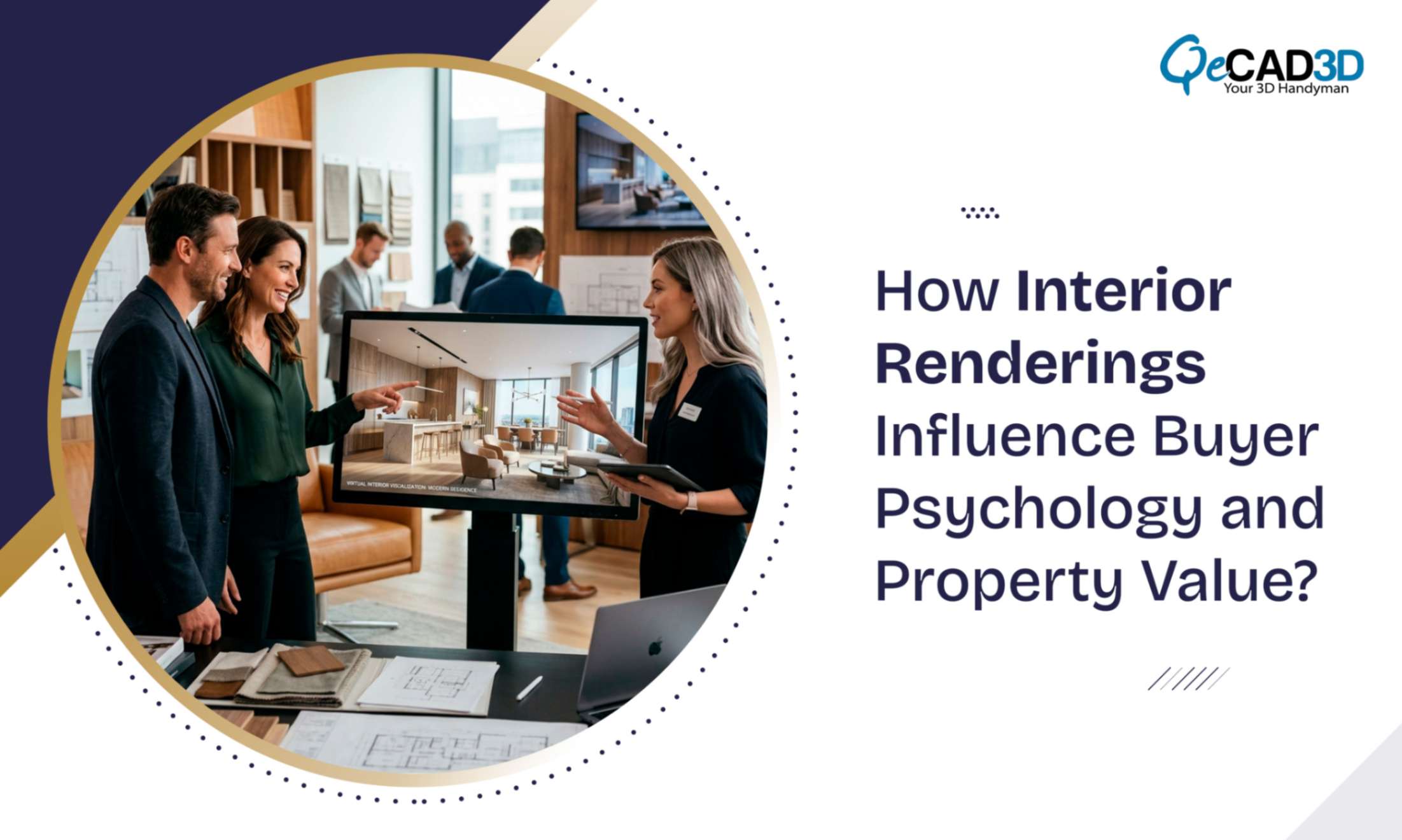
How Interior Renderings Influence Buyer Psychology and Property Value?
In today’s competitive real estate and development landscape, perception often influences the value as much as the physical asset itself. Buyers, investors and tenants increasingly make decisions before the construction is completed, relying heavily on the digital representations of spaces. High-quality visualizations allows the stakeholders to emotionally connect with a property, understand the spatial potential and visualize the finished environment.
This is where Interior Rendering Services plays a critical role. By producing the photorealistic visuals that showcases the design intent, materials, lightings and ambiance, the developers as well as the architects can significantly influence how the potential buyers perceive the value of a property. Advanced 3D Rendering Services are no longer just the marketing tools—they are the strategic assets that enhances the buyers confidence and accelerates the property transactions.
Below are some of the most impactful interior rendering trends that are shaping the property perception and increasing the real estate value in the eyes of buyers and investors.
- Photorealistic Lighting Simulation
Lighting has emerged as one of the most influential elements in interior visualization. Modern rendering tools simulates the natural daylight, artificial lighting layers, reflections and shadow depth with incredible accuracy.
Why it increases value perception?
● Spaces appear larger and more inviting
● Materials such as marble, glass and wood look more premium
● Buyers can better imagine the atmosphere of the space
Example: Luxury Penthouse Sale in Dubai
A luxury penthouse project in Dubai used photorealistic interior renderings, animations and a 360° walkthrough as a part of its marketing strategy.
Results:
● Penthouse sold 7% above the initial asking price ($8.35M)
● 65% increase in site visit requests for other units in the building
● Marketing video from renderings gained 47,000+ Instagram views
This example shows how realistic interior visualization can create emotional connection and drive buyer confidence even before the property is completed.
Key Insight
Properties marketed with realistic lighting visualizations often receive higher engagement on property portals and marketing campaigns as compared to the flat or schematic visuals.
- Lifestyle-Oriented Interior Scenes
Buyers rarely evaluate the empty spaces; they evaluate the lifestyles. One of the strongest trends in the interior renderings is staging the scenes that depicts the daily life.
Instead of showing an empty living room, renderings now include:
● Family gatherings around the dining tables
● Remote work setups in study corners
● Relaxation spaces with books and décor
Why it works?
Lifestyle-focused renderings helps the potential buyers to imagine themselves living in the space thus creating an emotional attachment.
Real Example
Many Australian real estate developers now present the apartment renderings showing hybrid workspaces integrated within the living rooms. Since the remote work became widespread, the properties that visually communicates work-from-home adaptability tend to attract the stronger buyer interest.
- Material Realism and Texture Detailing
Material accuracy has become a defining trend in the interior visualization. Buyers today notices the details such as fabric textures, brushed metal finishes, stone veins and wooden grains.
Advanced rendering techniques now simulates:
● Fabric softness and folds
● Marble translucency
● Micro-textures in concrete and wood
● Reflectivity of glass and metals
Impact on property perception
High-end material representation instantly signals the premium construction quality. Even subtle improvements in texture realism can make a space appear more luxurious.
Industry Example
Luxury hospitality projects often use hyper-realistic renderings that highlights the materials like travertine stone, brass fixtures and velvet upholstery to communicate the exclusivity before the construction even begins.
- Biophilic Interior Visualization
Biophilic designs—integrating nature into interiors—is becoming a major trend in both architecture and real estate marketing.
Interior renderings increasingly feature:
● Indoor plants and vertical gardens
● Natural daylight through large glazing
● Wooden finishes and organic materials
● Green balconies visible through windows
Why it increases perceived value?
Research in environmental psychology shows that the spaces connected to nature improves the well-being, productivity and comfort. Buyers often associate such environments with the healthier and higher-quality living.
Real Example
Residential developments in Singapore and Scandinavia frequently highlights the greenery in their renderings, showcasing the indoor plants, green terraces and courtyard views. These visuals communicates the sustainability and wellness-driven design.
- Cinematic Camera Angles and Composition
Traditional renderings used straightforward perspectives similar to the architectural drawings. Modern interior renderings borrows the techniques from photography and cinematography.
Common approaches includes:
● Wide-angle interior shots
● Eye-level perspectives that mimics the human viewing height
● Focused depth-of-field for dramatic effect
● Dynamic framing through doors or corridors
Why this matters?
These techniques make spaces feel immersive and realistic thereby allowing the viewers to mentally “walk through” the property.
Example
High-end residential marketing campaigns often use the cinematic perspectives from living rooms looking outward towards the skyline views or landscapes, emphasizing the lifestyle and location value of the property.
- Smart Home and Technology Integration
As smart home technology becomes standard in modern properties, renderings are beginning to visualize these features.
Examples include:
● Smart lighting control panels
● Automated blinds
● Digital home assistants
● Integrated entertainment systems
Why it influences buyer perception?
Visualizing the smart technology helps to position the property as future-ready and technologically advanced.
Industry Example
Luxury condominium developments in the United States now includes the renderings showing smart mirrors, automated lighting systems and integrated kitchen technology to highlight the modern living standards.
- Day-to-Night Interior Visualization
Another emerging trend is presenting the same interior in multiple lighting conditions—daytime and nighttime.
This technique helps buyers to understand:
● Natural daylight penetration
● Evening ambiance with artificial lighting
● Mood transitions within the space
Impact
Day-to-night renderings provide a fuller experience of the property and strengthen emotional engagement with the design.
Real Example
Many real estate marketing campaigns now present paired renders: a bright daytime living room scene alongside a cozy evening version with warm lighting and illuminated city views.
- Minimalist and Clutter-Free Styling
While realistic staging is important, cluttered interiors can reduce the perceived value. Modern renderings emphasizes minimal, elegant styling.
Common characteristics includes:
● Neutral color palettes
● Clean furniture layouts
● Limited but strategic décor elements
● Balanced negative space
Why it works?
Minimalist visualization allows buyers to imagine personalizing the space while still appreciating its design potential.
Key Takeaways
Interior renderings has evolved from simple visual support to a powerful value-enhancement strategy in real estate marketing. When executed strategically, interior visualizations can significantly influence the buyer psychology and property perception.
Some of the trends includes:
● Photorealistic lighting simulation
● Lifestyle-based staging
● Hyper-realistic material representation
● Biophilic design visualization
● Cinematic perspectives
● Smart home feature visualization
● Day-to-night interior storytelling
● Minimalist and elegant styling
For developers, architects and real estate marketers, leveraging advanced 3D Rendering Services can dramatically improve how the potential buyers perceive quality, comfort and luxury within a property.
Conclusion
In an era where most property decisions begin online, the first impression often comes from visualizations rather than just the physical visits. Interior renderings that combines the design accuracy, emotional storytelling and technological sophistication can transform how a property is perceived in the market.
By adopting the modern rendering techniques and visualization trends, developers can present the spaces that feel aspirational, functional and valuable—long before the construction is completed. As a result, well-executed interior visualizations not only enhances the marketing efforts but also contributes directly to the stronger buyer interest and higher perceived property value.