
How Consistent Material Libraries Improve Accuracy in 3D Visualization?
In architectural and design visualization, accuracy is everything. While advanced rendering engines and high-end hardware plays an important role, the true foundation of realism lies in something far more fundamental: material consistency. A well-structured and well standardized material library is essential for producing accurate, repeatable and high-quality 3D visualizations that aligns with the real-world expectations.
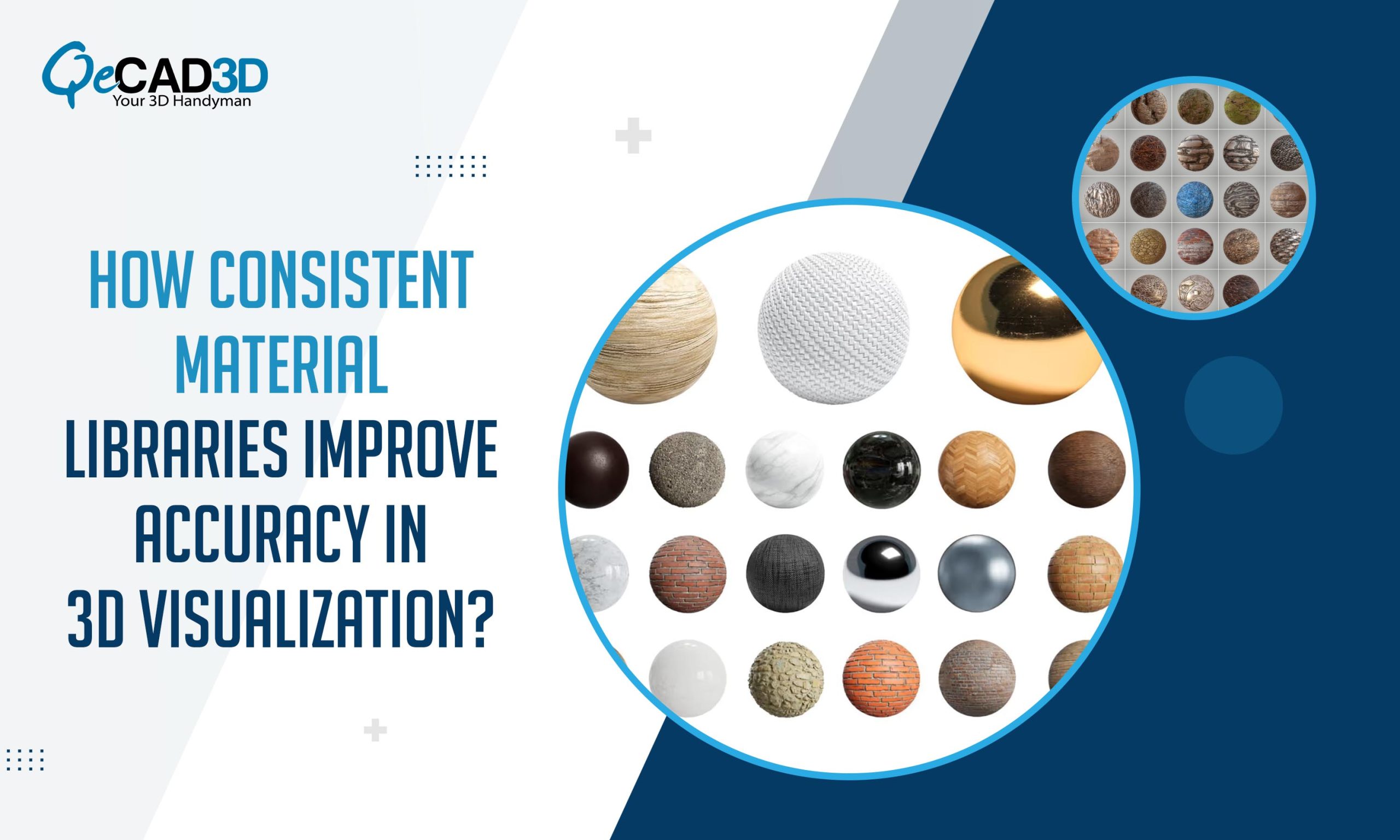
Material libraries are more than the collections of the textures—they are the strategic assets that influences the design communication, workflow efficiency as well as the client trust. When created and maintained correctly, they ensure visual clarity from early concept development through final presentations.
Why Consistent Material Libraries Matter?
Inconsistent materials can lead to misleading visuals, frequent revisions and misalignment between the design intent and final output. Differences in color tones, reflectivity, texture scale or finish properties may seem minor but they can significantly impact how a design is perceived.
Consistent material libraries help teams:
- Maintain uniform visual quality across multiple projects
- Ensure accurate material behavior under different lighting conditions
- Reduce reworks caused by mismatched or incorrect materials
- Deliver predictable and reliable outputs to clients
When every team member works from the same standardized library, the result is a cohesive visual narrative that accurately represents the design vision.
Core Elements of an Effective Material Library
Building a reliable material library requires technical accuracy and organizational discipline.
- Physically Based Material Properties
Materials should be created using physically based rendering (PBR) principles. This includes accurate albedo values, roughness, reflectivity, normal maps along with the transparency settings. Proper calibration ensures materials respond realistically to light, whether in daylight, artificial lighting or mixed environments. - Accurate Scale and Resolution
Textures must be mapped at correct real-world scales. Incorrect scaling such as oversized wood grains or tiled stone patterns—instantly reduces the realism. Maintaining consistent resolution standards also ensures the materials retain visual clarity without inflating file sizes. - Clear Naming Conventions and Categorization
A logical naming structure makes materials easy to find and reuse. Categorizing assets by type (wood, metal, fabric, glass, stone) and finishes (matte, glossy, brushed, polished) improves the efficiency and minimizes the duplication across projects. - Alignment with Real-World Specifications
Whenever possible, materials should reflect the actual manufacturer data or industry-standard specifications. This alignment strengthens the credibility and allows visual outputs to support downstream decision-making during procurement or construction.
Improving Workflow Efficiency and Collaboration
Consistent material libraries streamlines the collaboration between architects, interior designers and visualization teams. Instead of recreating materials for every project, teams can focus on refining design details and storytelling.
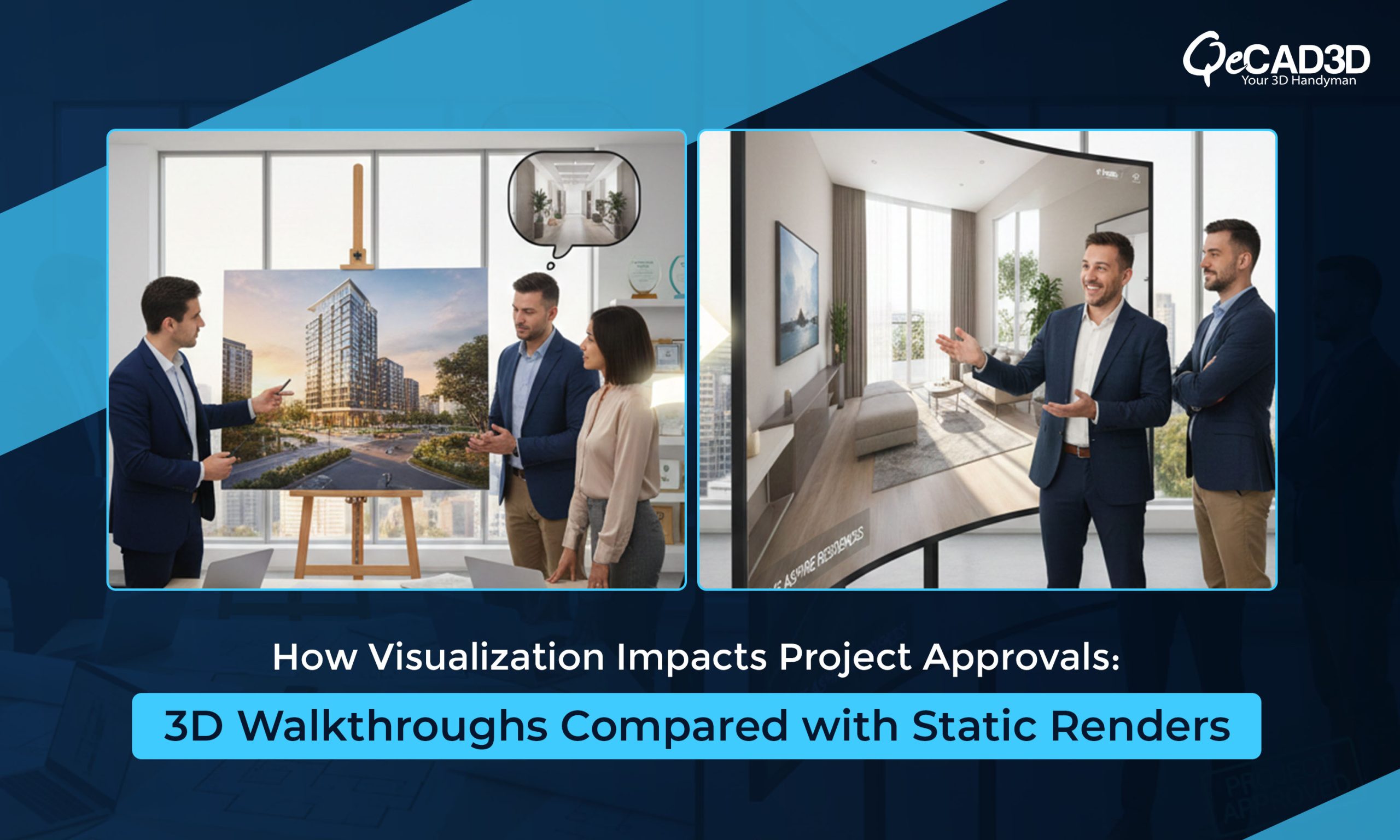
For firms delivering 3D Visualization Services, standardized material libraries reduces the turnaround time, improve scalability and ensure that visual quality remains consistent regardless of project size or location. This consistency ensures seamless collaboration across regions and distributed teams.
The Role of Material Libraries in Interior Visualization
Interior environments are particularly sensitive to material accuracy. Surfaces interact closely with lighting, furnishings, and spatial proportions. Even subtle inconsistencies can affect how warm, spacious, or luxurious a space appears.
By leveraging a controlled and well-maintained library, teams offering Interior Rendering Services can:
- Achieve cohesive finishes across rooms and spaces
- Maintain consistent color palettes and surface tones
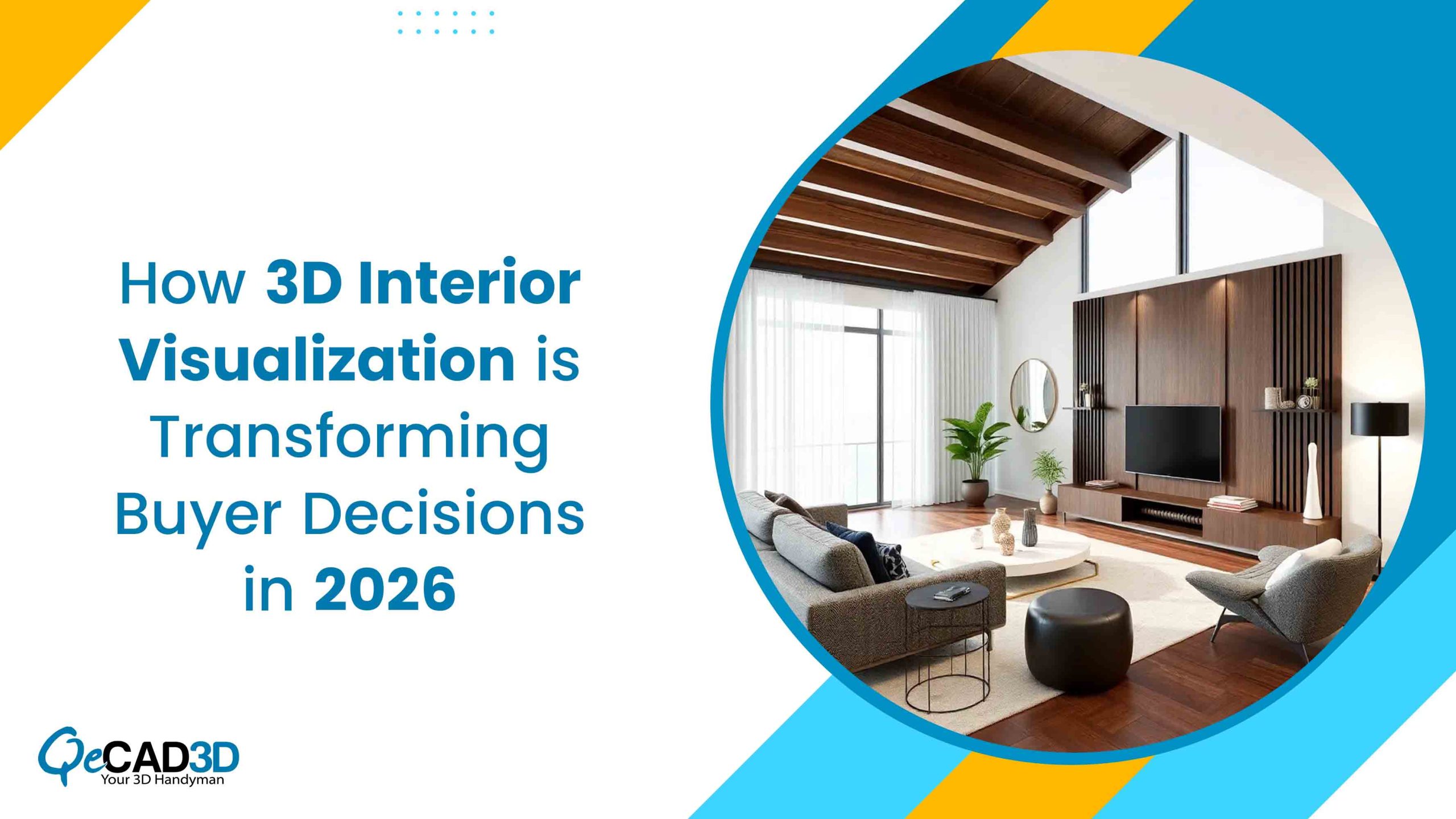
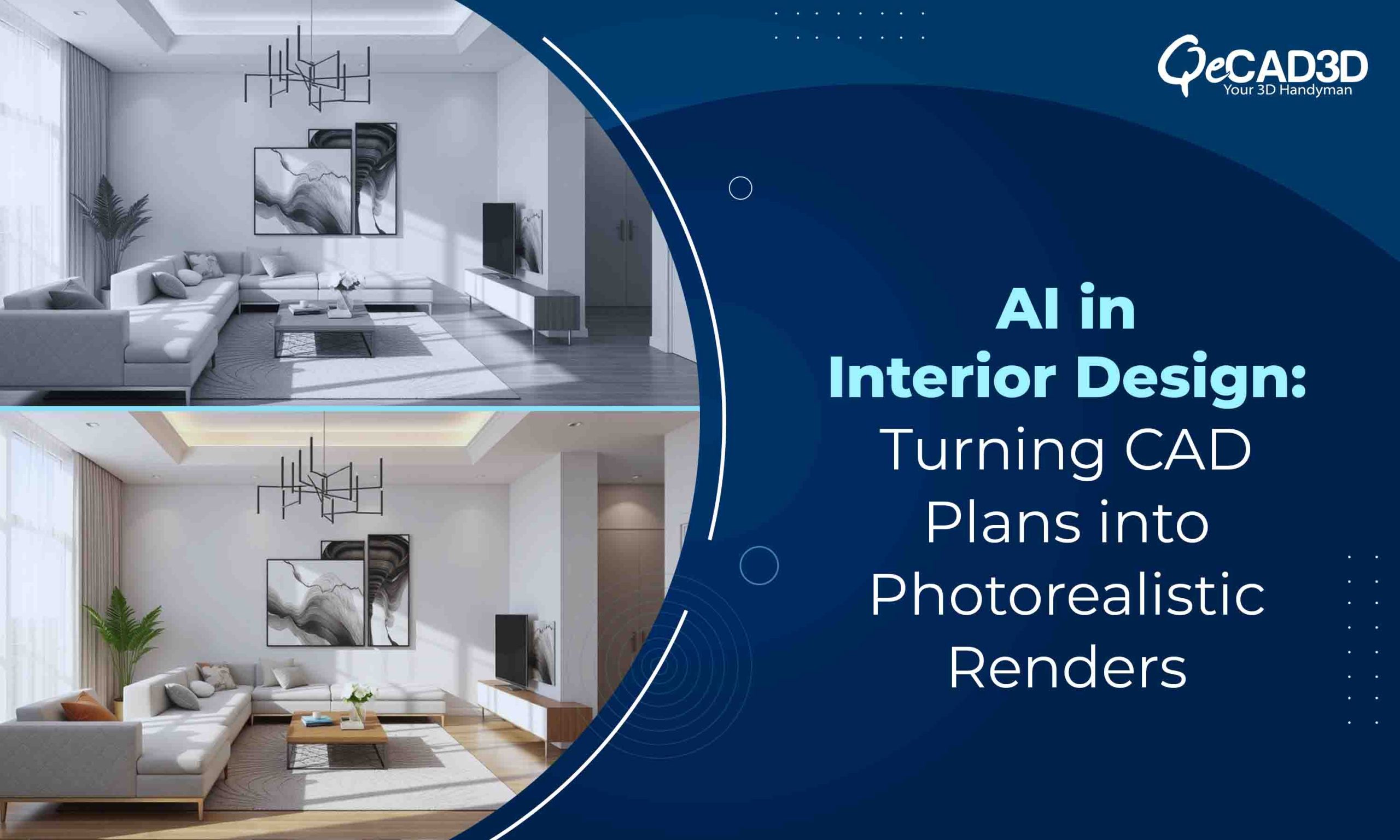
- Accurately represent fabric textures, flooring and wall finishes
- Enhance realism in close-up and detail-focused views
Accurate materials help clients to visualize how a space will truly feel thereby leading to faster approvals and more confident design decisions.
Best Practices for Maintaining Material Libraries
Material libraries should evolve alongside the design trends, technology and project requirements. To maintain their effectiveness:
- Regularly audit and update materials
- Remove outdated or unused assets
- Implement version control to track improvements
- Document material standards and usage guidelines
- Train teams to apply materials correctly across different software platforms
Consistency is not achieved through one-time setup—it requires continuous refinement and quality control.
Conclusion
Creating consistent material libraries is a strategic investment that pays dividends in accuracy, efficiency and client satisfaction. By standardizing materials, ensuring physical accuracy and aligning visuals with the real-world specifications, the design teams can deliver reliable and compelling 3D visualizations every time.
In an industry where visuals drive understanding and decision-making, consistent material libraries are not just a technical necessity—they are a cornerstone of professional, high-quality visualization.