
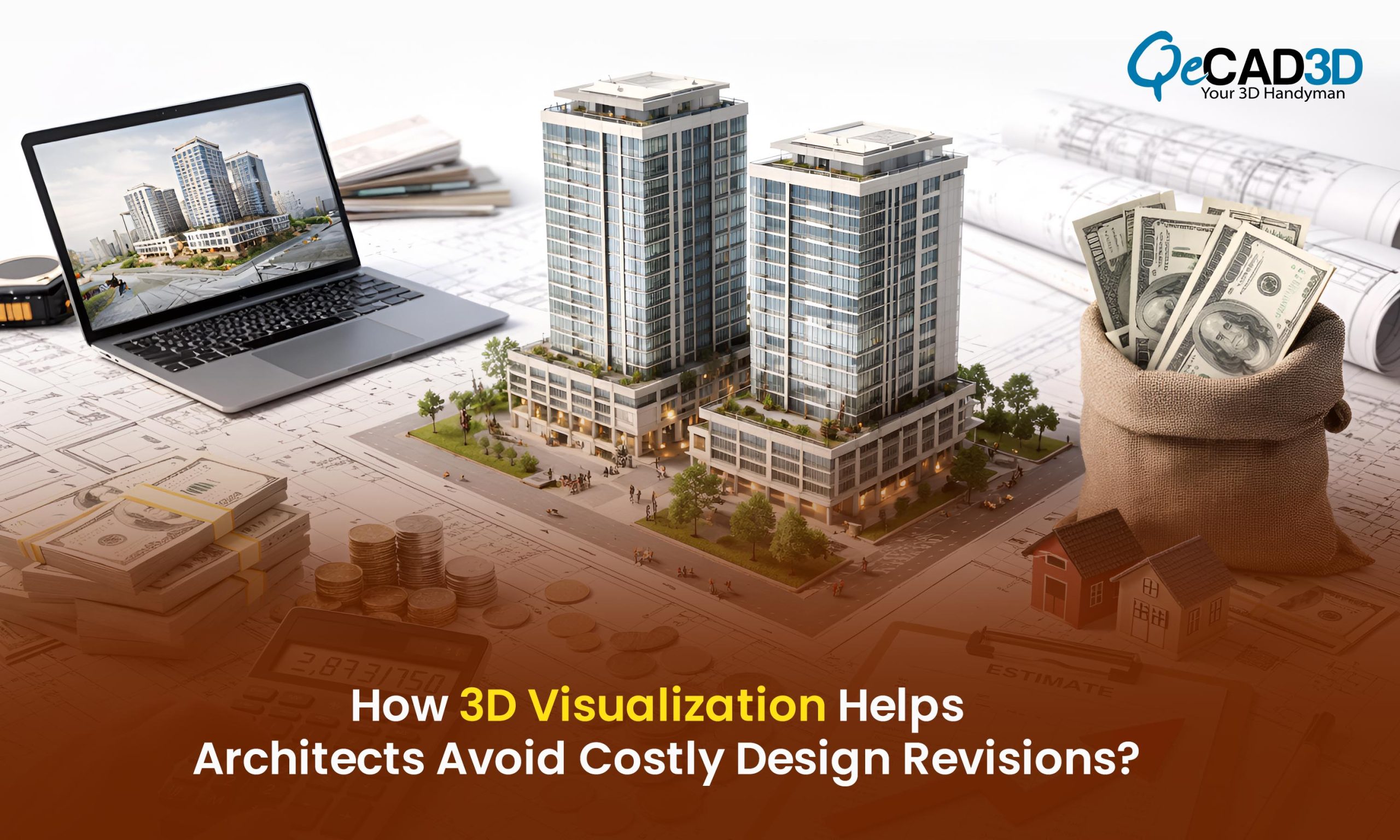
How 3D Visualization Helps Architects Avoid Costly Design Revisions?
In today’s dynamic and fast-moving AEC landscape, design accuracy and efficiency are more critical than ever. Frequent revisions not only delays the project timelines but also increases the costs and creates coordination challenges among the stakeholders. To overcome these issues, architects are increasingly relying on the advanced visualization techniques to streamline the design process and minimize reworks.
Visualization is no longer just a presentation tool—it has become a strategic asset that enables the architects to identify issues early, communicate ideas clearly and make informed decisions before the construction begins.
The Challenge of Design Revisions in Architecture
Design revisions often stem from:
- Misinterpretation of 2D drawings
- Lack of clarity in spatial planning
- Poor coordination between the disciplines
- Late-stage client feedback
Traditional workflows relying heavily on the 2D plans and elevations leave room for ambiguity. Consequently, errors tend to surface only in later phases, making revisions both costly and time-consuming.
How Visualization Transforms the Design Process?
- Enhanced Design Clarity
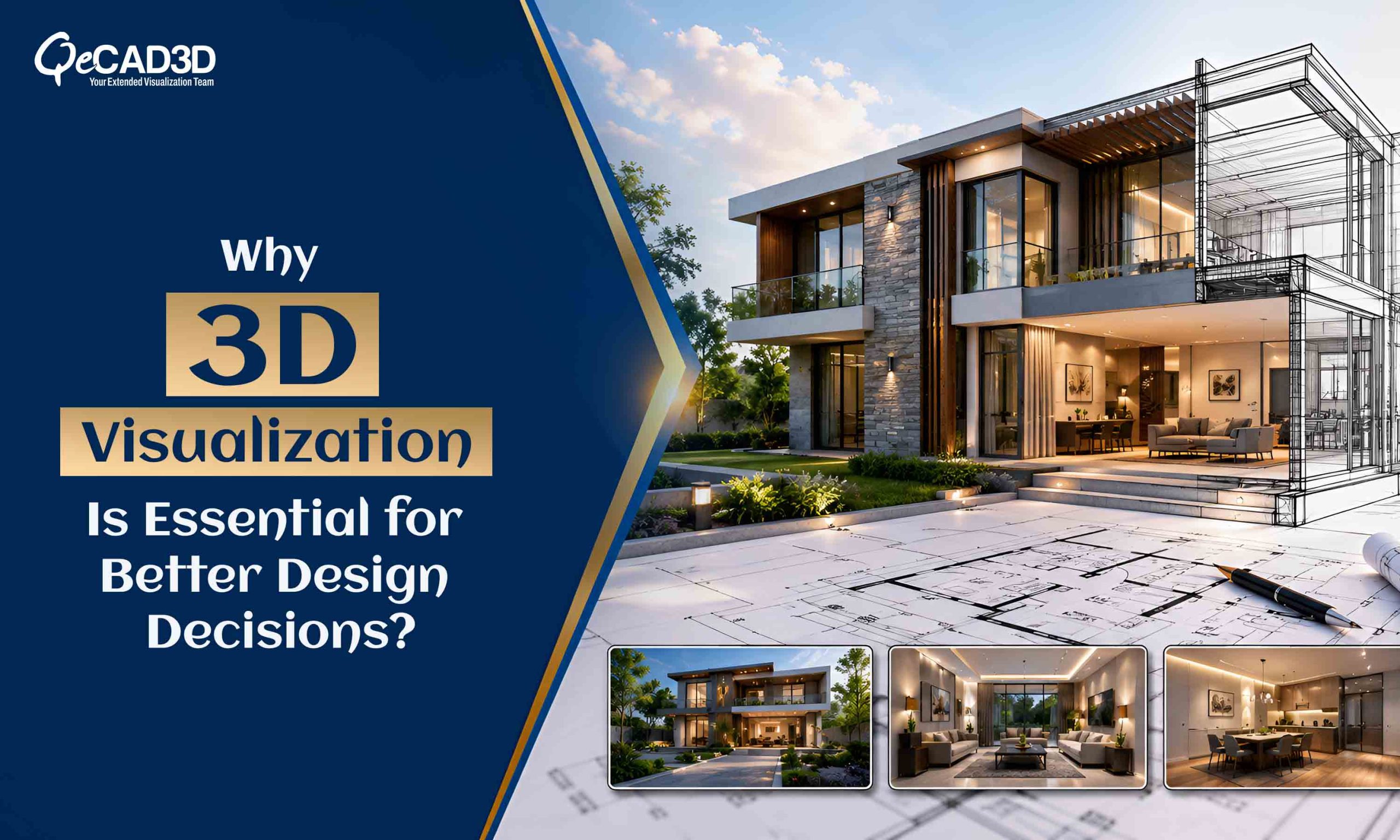
3D visualization enables architects to present designs with a high level of realism and detail. Instead of imagining spaces from 2D drawings, stakeholders can clearly understand proportions, materials, lighting and spatial relationships.
This clarity significantly reduces the misunderstandings and ensures that everyone—from clients to contractors—is aligned from the beginning.
- Early Detection of Design Flaws
Visualization helps to identify the potential design issues at an early stage, such as:
- Spatial conflicts
- Aesthetic inconsistencies
- Functional inefficiencies
By spotting these problems before construction, the architects can make quick adjustments thereby avoiding the costly revisions later.
- Improved Client Communication & Faster Approvals
Technical drawings can be challenging for clients to interpret. Visualization bridges this gap by providing photorealistic images and walkthroughs that are easy to understand.
With the help of Architectural Rendering Services, the architects can present multiple design options thus enabling the clients to make faster and more confident decisions—reducing back-and-forth revisions.
- Real-Time Design Iterations
Modern visualization tools allow the architects to make quick changes and instantly reflects them in the model. Whether it’s modifying materials, adjusting layouts or experimenting with lighting, real-time updates accelerates the decision-making process.
This agility minimizes the delays and helps to maintain the steady and efficient project progress.
- Better Coordination Across Disciplines
Visualization supports improved the collaboration between the architects, engineers and contractors. When all the stakeholders work with a shared visual model, coordination becomes more seamless.
This reduces clashes, miscommunication and the need for design changes during the construction.
- Accurate Interior Planning
Interior spaces requires precise detailing and aesthetic alignment. Through Interior Rendering Services, architects and designers can visualize the furniture layouts, color schemes, textures and lighting conditions in advance.
This ensures that the final output matches the client expectations thereby minimizing the last-minute changes and redesigns.
Key Benefits of Using Visualization
- Reduced design errors and reworks
- Faster client approvals
- Improved project timelines
- Enhanced stakeholder collaboration
- Better cost control and ROI
The Future of Visualization in Architecture
With advancements in technologies like real-time rendering, virtual reality (VR) and augmented reality (AR), visualization is becoming even more immersive and interactive. Architects can now offer the clients virtual walkthroughs thus allowing them to experience the spaces before they are built.
As these technologies evolves, the reliance on visualization will only grow hence making it an indispensable part of the modern architectural workflows.
Conclusion
Design revisions are inevitable—but excessive revisions are not. By integrating the visualization into the design process, architects can proactively address the challenges, improves the communication and deliver more accurate designs.
In an industry where precision and efficiency defines the success, visualization is not just a tool—it’s a competitive advantage. Architects who embrace it are better equipped to reduce revisions, enhance client satisfaction and deliver projects that meet expectations the first time.